Safe Sleep for Babies: Current AAP Guidance Every Parent Should Know
When this site first wrote about reducing the risk of SIDS back in 2009, the core advice was already clear: babies sleep safest on their backs. The guidance from the American Academy of Pediatrics (AAP) has been refined and re-confirmed since then, and it remains some of the most important information a new parent can absorb during those bleary first months. Safe sleep is not complicated, and it does not require buying anything special — it is mostly about a few consistent habits, repeated for every nap and every night.
This article lays out the widely published AAP recommendations in plain language. It is general information for parents, not medical advice for your individual child. Your pediatrician knows your baby's specific situation, and their guidance always comes first — bring your sleep questions to those checkups, especially if your baby was premature or has any medical condition.
The Foundation: Back to Sleep, Every Sleep
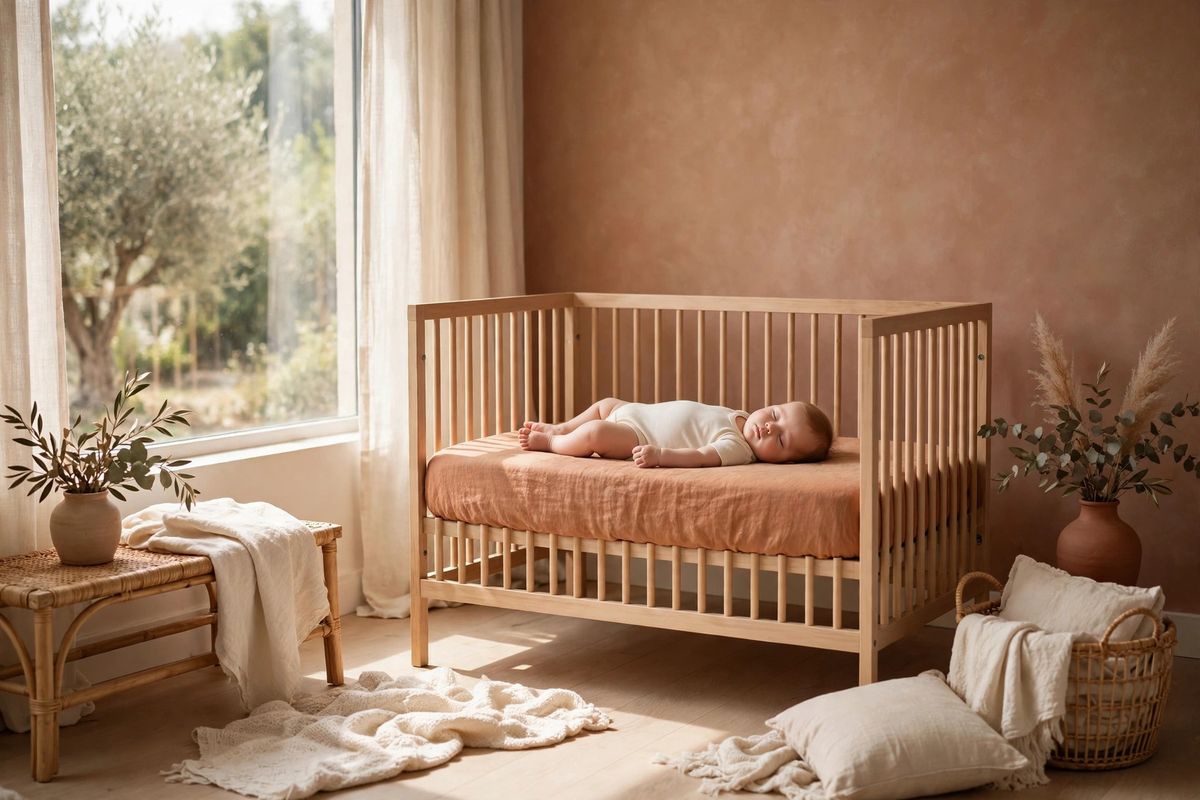
The single most important guideline is also the simplest. Babies should be placed on their backs for every sleep — naps, nighttime, at home, at daycare, at Grandma's house — until their first birthday. Back sleeping is associated with a substantially lower risk of SIDS than stomach or side sleeping, and it does not increase the risk of choking, a worry many grandparents were raised with. Babies' anatomy actually protects the airway better on their backs.
Once your baby can roll both ways independently, you do not need to flip them back if they roll over during sleep — but keep starting every sleep on the back, and keep the sleep space bare so rolling is safe. Tummy time matters too, but it is for awake, supervised hours on the floor, where it builds the strength babies need.
The Sleep Space: Firm, Flat, and Bare
Where your baby sleeps matters as much as the position. The AAP recommends a firm, flat sleep surface — a crib, bassinet, or play yard that meets current safety standards, with a fitted sheet and nothing else in it. That means the sleep space stays empty:
- No soft bedding: no pillows, blankets, quilts, or comforters under or over the baby.
- No stuffed animals or soft toys: save the lovey for awake cuddles until your child is older.
- No crib bumpers: padded or mesh, they are not recommended and do not belong in the crib.
- No sleeping in inclined products: swings, bouncers, car seats, and loungers are for awake time or travel, not routine sleep. If your baby falls asleep in a car seat outside the car, move them to a flat surface when you can.
- No positioners or wedges: products marketed to keep babies in place or elevated are not part of safe sleep guidance.
Dress your baby in a wearable blanket or sleep sack instead of loose blankets to keep them warm, and keep the room at a comfortable temperature — overheating is its own risk, so if you are comfortable in light clothing, your baby in one more layer likely is too.
Room Sharing: Close By, Not in the Bed
The AAP recommends that babies sleep in the parents' room, in their own crib or bassinet, ideally for at least the first six months. Room sharing makes nighttime feeding easier and is associated with a lower risk of SIDS. Bed sharing, however, is not recommended — adult beds have soft mattresses, pillows, and heavy blankets, and the risks rise further if a parent is overtired, has consumed alcohol, or if the baby is very young or was born early.
Feeding in bed at 3 a.m. happens to everyone; the guidance is simply to return your baby to their own sleep space when you are done, rather than drifting off together. If you think you might fall asleep while feeding, doing so in a bed cleared of pillows and loose blankets is considered safer than on a sofa or armchair, which are the most hazardous places of all to fall asleep holding a baby — and the baby still goes back to the crib as soon as you wake.
Other Habits That Support Safe Sleep
A few everyday habits round out the AAP guidance:
- Offer a pacifier at naps and nighttime once feeding is established; pacifier use during sleep is associated with a reduced risk of SIDS, and there is no need to reinsert it if it falls out.
- Keep your baby smoke-free: no smoking during pregnancy or around the baby afterward, including in the home and car.
- Breastfeed if you can: breastfeeding is associated with a lower risk of SIDS, though the core sleep-environment guidance applies to every baby however they are fed.
- Stay current on checkups and immunizations, and be skeptical of products that promise to prevent SIDS — monitors and gadgets are not a substitute for the sleep environment above, and no product is endorsed for that purpose.
- Share the rules with every caregiver: grandparents, sitters, and daycare staff all need the same back-to-sleep, bare-crib routine. Consistency across caregivers is where safe sleep often succeeds or fails.
One helpful way to remember the essentials is the ABCs: baby sleeps Alone, on their Back, in a Crib — every sleep, every time.
Frequently Asked Questions
My baby sleeps longer on their stomach. Can I make an exception?
It is true that many babies sleep more deeply on their stomachs — and that deeper, harder-to-rouse sleep is considered part of why stomach sleeping carries more risk. The AAP guidance has no exception for it: keep placing your baby on their back for every sleep until age one, even if the stretches are shorter. Talk with your pediatrician if sleep is truly unmanageable; they can help troubleshoot within the guidelines.
What if my baby spits up a lot or has reflux?
Back sleeping is still recommended for babies with reflux in almost all cases, because the airway is protected in that position. Elevating the head of the crib is not recommended. If you are worried about your baby's reflux or swallowing, raise it with your pediatrician, who can advise on your child's specific situation.
When can my baby have a blanket or a stuffed animal in the crib?
The AAP advises keeping soft objects and loose bedding out of the sleep space for at least the first 12 months. Until then, a wearable blanket keeps your baby warm without loose fabric. After the first birthday, many families introduce a small lovey or light blanket — check with your pediatrician if you are unsure about timing for your child.