Headphones for Kids: Safe Volume Limits Parents Should Know
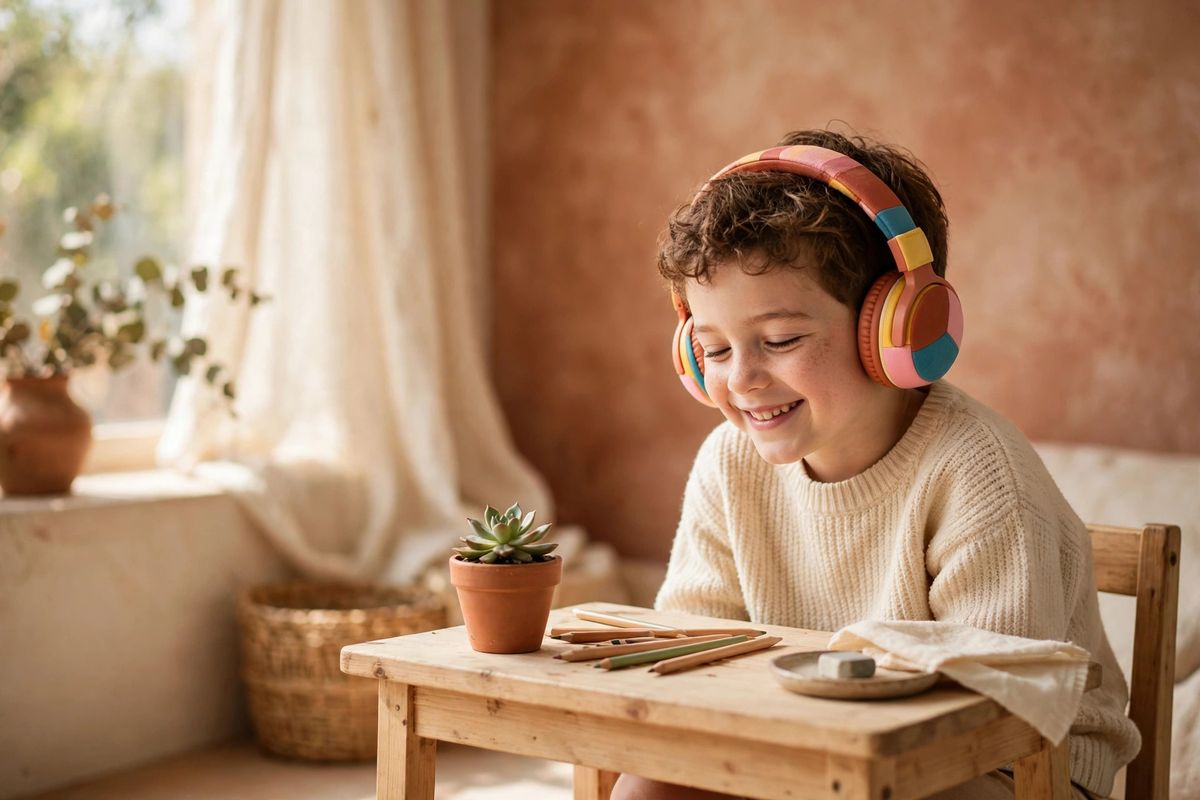
Kids' headphones have quietly become standard school and travel gear: audiobooks in the car, schoolwork on a tablet, music practice, and the occasional parents-need-quiet hour. The good news is that headphones made for children are far better than they used to be, with built-in volume limits, flexible frames, and sizes that actually fit small heads. The less obvious news is that not all volume limiting works the same way, and a few simple family habits matter as much as the product itself. Here is a calm, clear rundown of what the numbers mean, what features to look for, and how to set house rules that keep listening comfortable.
Why Volume Limits Exist
Sound is measured in decibels, and the key idea for parents is simple: the louder the sound, the less time small ears should spend with it. Headphones sit close to the ear, so their volume deserves more attention than a speaker across the room. That is why many children's headphones are built with a maximum volume limit, commonly around 85 decibels, which is roughly the level of busy city traffic. A limit like that lets kids hear clearly in most settings without the volume creeping into ranges meant for short bursts. Think of the limiter as a guardrail: it quietly prevents the worst settings while your child enjoys the story.
What to Look for When You Shop
- A real volume limit. Look for a stated maximum, often 85 decibels or lower for younger children. Some models offer two modes, a lower limit for toddlers and a slightly higher one for older kids and travel.
- Fit and comfort. Lightweight frames, soft ear cushions, and an adjustable headband matter over a long car ride. If headphones pinch, kids either refuse them or push the volume up to compensate for a poor seal.
- Durability. Flexible, twistable headbands survive backpacks and younger siblings. Detachable cables are easier to replace than built-in ones.
- Wired or wireless. Wired models never need charging and plug into anything; wireless ones free kids from tangles but need charging and may include extra controls to manage.
- Sharing features. Some kids' headphones include a second jack so two children can listen to one device on a flight, a small feature families end up loving.
- Volume controls you can supervise. On-device limits work best when paired with the volume settings on the tablet or player itself, where many devices let you set a maximum as well.
Types of Kids' Headphones
On-ear headphones are the most common style for children: light, affordable, and easy to slip on and off, though they let in more outside noise. Over-ear styles cushion the whole ear, block more background sound, and often let kids listen happily at lower volumes, which is a quiet advantage on planes and in busy rooms. Volume-limited earbuds exist for older kids but are harder to fit well in small ears and easier to lose, so many families save them for the preteen years. Noise-reducing models deserve a mention: by softening background noise, they reduce the urge to crank the volume, which is the whole point. Whatever style you choose, the built-in limit and a good fit do most of the protective work.
A word about settings on the device itself. Most tablets and phones include a headphone safety or volume-limit option tucked into their sound settings, and turning it on gives you a second layer of protection beyond the headphones' own limiter. It takes a minute to set up, works with every pair of headphones your child borrows, and quietly prevents the slow volume creep that happens when a favorite song comes on. If your child uses a school-issued device, it is worth asking the teacher what limits are already in place, so the rules at school and home feel consistent rather than contradictory.
House Rules That Keep Listening Comfortable
Gear helps, but habits carry the day. A few simple family rules cover most situations:
- Start low. Begin every session at a modest volume and let your child raise it only a little if needed.
- Use the conversation test: if your child cannot hear you speaking at arm's length in a normal voice, the volume is probably too high.
- Build in breaks. A pause every hour or so during long listening sessions gives ears, and attention spans, a rest.
- Mind noisy settings. On planes and in cars, the temptation is to out-shout the engine; that is exactly when over-ear styles and supervision earn their keep.
- Model it yourself. Kids copy the listening habits they see, including how loud the grown-ups play their own music.
None of this needs to feel strict. Framed as taking care of your ears the way you take care of your teeth, these habits become ordinary family routine within a week or two.
Frequently Asked Questions
What volume limit should I look for?
For most children, headphones limited to about 85 decibels are the common recommendation, and younger children often do well with lower limits. Just as important is listening time: moderate volume for a reasonable stretch beats loud volume for a short one.
Are wireless headphones safe for kids to use all day?
The style matters less than volume and total listening time. Wireless models add convenience and remove cord tangles, but they also make it easier to wander far from the device and its controls, so the same volume limits and break habits still apply.
How can I tell if my child's headphones are too loud?
Try the arm's-length conversation test, and also listen for sound leaking from the ear cups: if you can clearly make out the words or melody from a few feet away in a quiet room, it is likely turned up too far. Most tablets and players also show a volume bar you can cap in settings.