Holiday Gift Guide for Toddlers 1-3 Years
Toddlers are tiny scientists with strong opinions and very busy hands. Between ages one and three, they climb, pour, stack, scribble, imitate, and test gravity about four hundred times a day. The best holiday gifts respect that energy. They give toddlers something safe to practice, something cozy to love, and something they can use again tomorrow in a completely new way.
When you shop for this age, think sturdy, washable, and open-ended. One- and two-year-olds do not need complicated instructions or a hundred tiny parts. They need gifts that invite movement and pretend play, help language grow, and survive being dropped from a highchair. Here is how to choose by stage, from new walkers to almost-preschoolers who insist they can do it themselves.
Gifts for One-Year-Olds on the Move
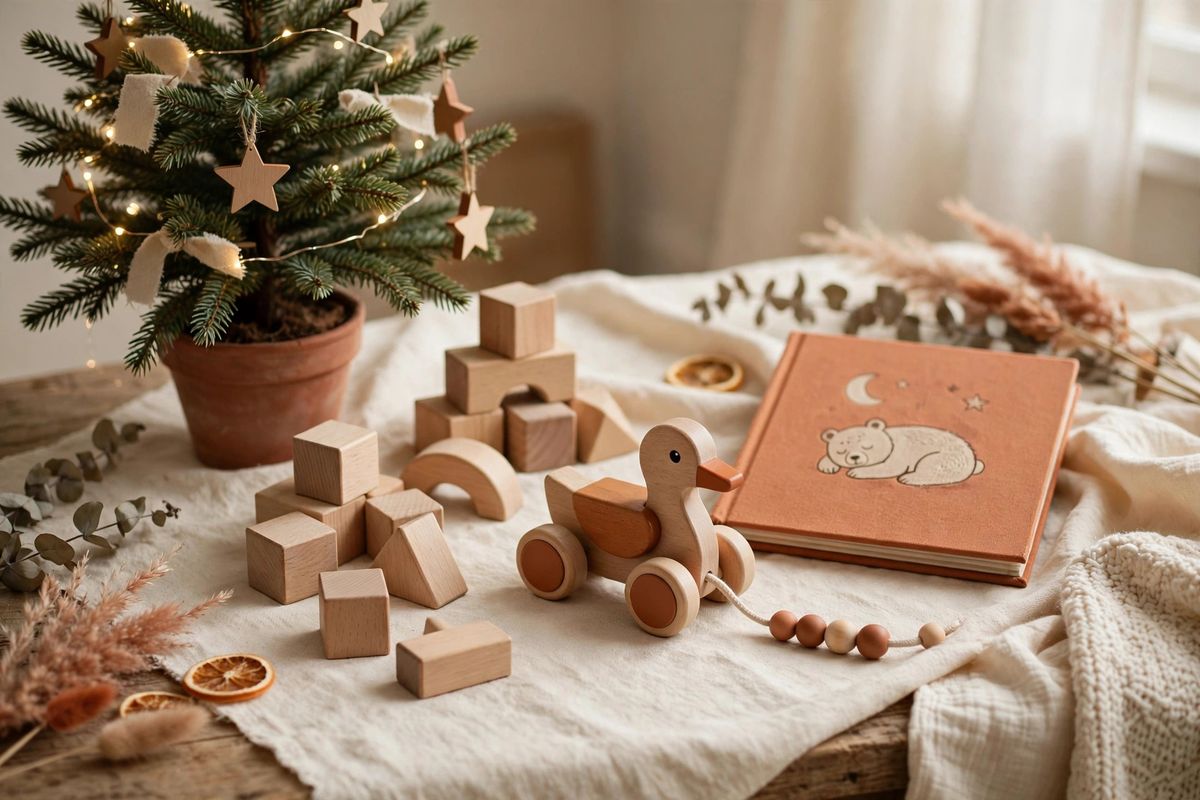
New toddlers are working hard on balance, coordination, and cause and effect. A stable push toy or small ride-on gives them a job to do as they travel from couch to kitchen and back again. Balls sized for little hands, stacking cups, and simple shape sorters let them practice grasping and problem solving while seated, which is helpful when the weather keeps everyone inside.
Look for gifts that respond without overwhelming. A toy that makes a gentle sound when pushed is different from one that erupts in lights and songs when a button is barely touched. Toddlers are learning to connect their actions to results, so simple feedback is plenty. Chunky puzzles with knobs, big building blocks, and nesting toys are patient teachers. They can be used together at first, then slowly become independent play.
- Push toys, ride-ons, and toddler balls for safe indoor movement.
- Stacking cups, nesting boxes, and knob puzzles for early problem solving.
- Chunky crayons, washable markers, and large paper for first art.
- Board books with flaps, textures, animals, vehicles, and familiar routines.
- Soft dolls or stuffed animals that are easy to wash and carry everywhere.
Gifts for Busy Two-Year-Olds
Two-year-olds are famous for wanting independence. They want to pour the water, carry the bag, open the container, and choose the red cup. Gifts that support helpful pretend play are gold. A small play kitchen, toy tools, a doctor kit, play food, or a child-size cleaning set lets them imitate family life in a safe way. These toys also grow language because toddlers narrate everything once they get going: cooking soup, fixing the chair, checking the baby heartbeat.
Building becomes more ambitious at two. Larger blocks, magnetic tiles with pieces sized appropriately for the child, train pieces, and simple vehicle sets can hold attention longer than a single-purpose toy. Art supplies are another strong choice because toddlers love process more than product. Finger paint, dot markers, stickers, and play dough with simple tools give them freedom without needing a finished masterpiece.
Choose gifts with cleanup in mind. A lidded bin for blocks, a small backpack for treasures, or a puzzle rack can be part of the present. Moms notice those details. If a set has many small accessories, check whether they are appropriate for a child who still mouths objects. Toddlers develop at different speeds, and safe beats impressive every time.
Gifts for Almost-Preschool Three-Year-Olds
By three, many children are bursting with stories. Dress-up clothes, capes, hats, doctor coats, and simple costumes help them try on new roles. They may run a restaurant, rescue animals, deliver mail, and host a concert before lunch. Gifts that support storytelling, such as puppets, toy figures, a small tent, or a pretend microphone, stretch imagination and social skills. Pair them with books and you have a gift that keeps changing as their vocabulary grows.
Three-year-olds are also ready for slightly more challenge. Beginner board games with no reading required teach taking turns and handling disappointment, which is no small holiday miracle. Simple matching games, first puzzles with more pieces, balance bikes with proper safety gear, and building sets with clearer goals can feel exciting and big-kid. Still, keep expectations gentle. The point is play, not performance.
A toddler gift succeeds when it says, in toddler language, try it again, move your body, tell a story, and make a happy mess we can clean together.
Experience gifts work beautifully for this age too. A trip to a children museum, a swim class, a special train ride, or a pancake breakfast date gives toddlers something to anticipate. Wrap a small clue, like a ticket in an envelope or a related picture book, so there is still something to open. Many three-year-olds remember the outing longer than the toy.
How to Avoid the Toy Avalanche
Toddlers can get overstimulated by too many new things at once. If your family gives generously, consider rotating toys after the holidays. Put a few gifts away and bring them out in a couple of weeks. It extends the joy and helps you see what your child truly loves. This is also a kind way to handle duplicates. Keep the receipt, exchange sizes when needed, and do not feel guilty about saving a gift for a birthday or a rainy week.
Coordinate with grandparents when you can. A short list of gift types is more helpful than a demand for one exact item. Mention current interests, clothing size, and anything you truly do not have space for. If someone asks for a bigger idea, suggest one quality active gift, a contribution toward classes or memberships, or art supplies that will be used up rather than stored forever.
- Balance one active gift, one quiet gift, and one book or creative gift.
- Skip toys with many tiny parts if your toddler still mouths objects.
- Choose washable, sturdy items that can handle daily love.
- Save a receipt and consider rotating new toys after the holidays.
Frequently Asked Questions
What is the best type of gift for a toddler?
Open-ended gifts usually win: blocks, play food, balls, art supplies, dress-up pieces, and sturdy vehicles. They can be used in many ways and often grow with the child for a year or more. The best choice depends on your toddler current stage. New walkers need movement and stacking; older toddlers thrive on pretend play, stories, and beginner games.
Are electronic toys good for ages one to three?
Some are fine in small doses, but toddlers learn most from moving, talking, and playing with real people. If you choose an electronic toy, pick one with simple responses, volume control, and a secure battery compartment. Balance it with plenty of non-electronic play. If a toy does all the playing while your child only watches, it is less useful than it looks.
How do I handle gifts that are too advanced?
Thank the giver warmly, then decide privately. If the gift is safe but challenging, you can save it for a few months and introduce it when your child is ready. If it has small parts or does not fit your child stage, exchange it for something appropriate. Safety and fit matter more than using every gift immediately.